Executive Summary:
- The AI Pivot: A transition from generative AI “hype” to measurable Return on Investment (ROI) in clinical trials and hospital operations.
- M&A Strategy: A surge in mid-sized, “bolt-on” acquisitions ($1B–$5B) rather than speculative mega-mergers.
- Metabolic Health 2.0: The expansion of GLP-1s into oral formulations and broader indications like chronic kidney disease (CKD).
- China-West Synergy: A record number of licensing deals for innovative Chinese biotech assets.
- The “Execution” Premium: Investors are rewarding companies with clear regulatory pathways and commercial-stage assets over “platform” promises.
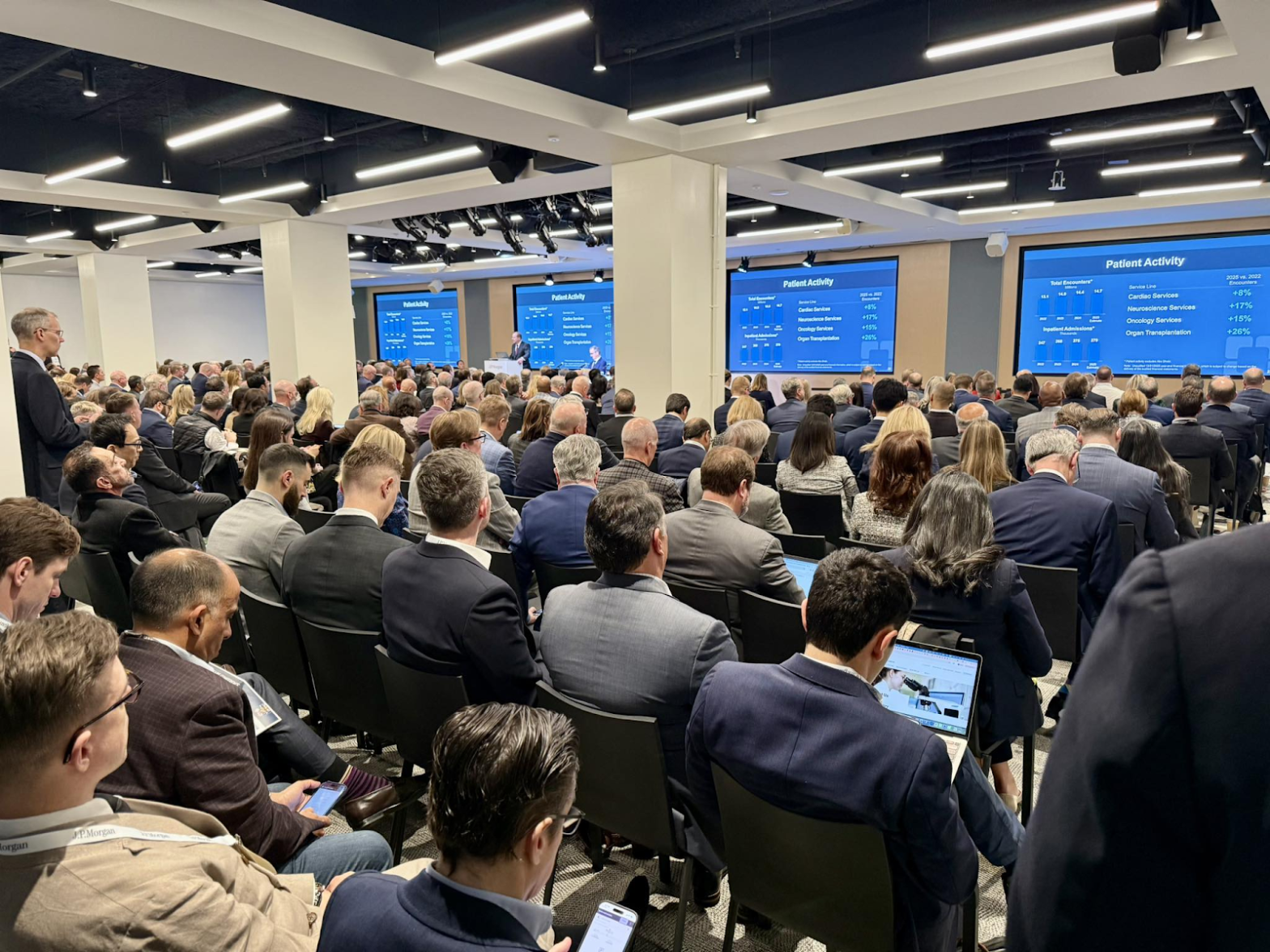
The 44th Annual J.P. Morgan Healthcare Conference, held from January 12–15, 2026, in San Francisco, officially marked the end of the industry’s “wait-and-see” era. As thousands of investors, CEOs, and innovators gathered at the Westin St. Francis, the narrative shifted from surviving high interest rates to a disciplined re-acceleration of growth.
If 2024 was about resilience and 2025 was about experimentation, JPM Week 2026 was defined by Execution.
1. Artificial Intelligence: From Hype to Clinical ROI
The most significant trend of JPM 2026 was the demand for proof. The industry has moved past the novelty of Large Language Models (LLMs) and toward Agentic AI—autonomous systems capable of managing Trial Master Files (TMF) and clinical reasoning.
Companies like SmarterDx and Medable dominated the conversation by showcasing how AI is now reclaiming “lost revenue” for health systems and shaving months off clinical trial timelines. The consensus among presenters was clear: AI is no longer a separate “tech” category; it is now the foundational infrastructure of modern medicine.
2. A Disciplined M&A Resurgence
The “M&A Winter” has officially thawed, but the landscape looks different than in previous cycles. Large-cap pharma companies—facing the “patent cliff” later this decade—used JPM 2026 to secure de-risked, mid-stage assets.
Key deals that set the tone for the week included:
- AbbVie’s $5 billion commitment to RemeGen for oncology assets.
- Eli Lilly’s strategic acquisition of Ventyx ($1.2B) to bolster its immunology pipeline.
- Novartis’s deepening investment in neuro-innovation via SciNeuro.
For investors, the takeaway was that “Big Pharma” is willing to pay a premium for assets that have already cleared Phase II, signaling a cautious but healthy appetite for external innovation.
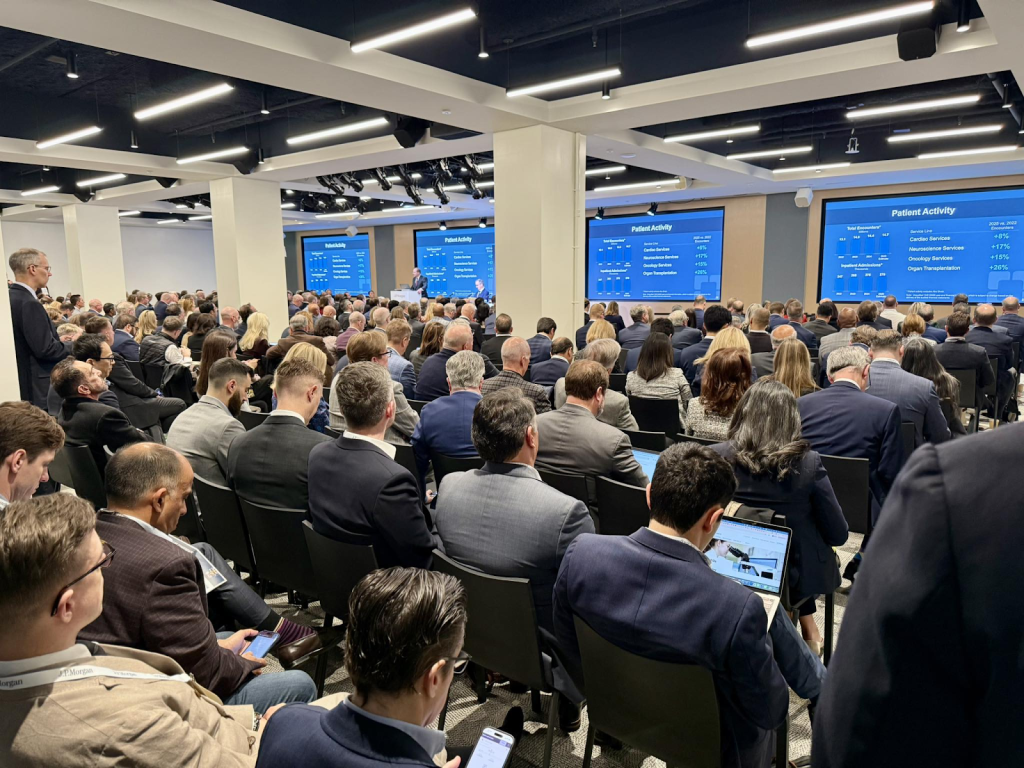
44th annual J.P. Morgan Healthcare Conference in San Francisco
3. The “China-West” Pivot
A defining theme of the 2026 conference was the undeniable influence of Chinese biopharma. No longer seen as a peripheral market, China has emerged as a primary source of innovation for oncology and bispecific antibodies.
Western pharmaceutical giants are increasingly looking to China for “decision velocity”—the ability to move from Phase I to Phase III trials with unprecedented speed. JPM 2026 saw a record number of “In-License” deals, where Western firms are betting on Chinese-developed molecules to fill their pipelines, effectively bridging the gap between Eastern R&D speed and Western commercial reach.
4. The Metabolic Revolution: Beyond Weight Loss
The GLP-1 (Obesity) market remains the industry’s brightest star, but the conversation at JPM 2026 shifted significantly. The focus has shifted from “simple weight loss” to Comprehensive Metabolic Health.
- Oral Formulations: Eli Lilly and Novo Nordisk both shared promising data on oral versions of their obesity drugs (such as orforglipron), which promise to solve the supply chain and needle-phobia issues of current injectables.
- Comorbidity Expansion: Data presented this week highlighted the success of these drugs in treating sleep apnea, heart failure, and liver disease (MASH), effectively rebranding them as multi-billion-dollar “preventative health platforms.”
5. Navigating the 2026 Macro Environment
With the conference taking place against a backdrop of global political shifts and a new U.S. administration, “policy anxiety” was a frequent topic in conference hallways. However, the tone remained surprisingly optimistic.
Industry leaders emphasized that while drug pricing regulations (such as the ongoing impact of the Inflation Reduction Act) remain a challenge, the fundamental demand for innovative medicine is at an all-time high. The IPO window, which had been narrow for years, showed signs of opening wider for companies that can demonstrate a clear path to profitability.
Conclusion: The Future of Health is Integrated
JPM Week 2026 proved that the “Great Reset” is over. The winners of this year’s conference were those who integrated AI into their core operations, de-risked their clinical pipelines, and sought global innovation.
As we look toward the rest of 2026, the healthcare sector is leaner, smarter, and more focused on tangible patient outcomes than ever before.
Discover how HosTalky is transforming the way healthcare teams connect, collaborate, and deliver results—with AI that works as hard as you do.

QQ88 cung cấp hệ sinh thái giải trí trực tuyến toàn diện, tích hợp nhiều trò chơi phổ biến cùng cơ chế vận hành ổn định và an toàn.
QQ88 là nền tảng giải trí online được tối ưu trải nghiệm, giúp người dùng truy cập nhanh, thao tác mượt và tận hưởng dịch vụ ổn định lâu dài.
QQ88 đóng vai trò như cổng kết nối chính thức, hỗ trợ người dùng tiếp cận hệ sinh thái cá cược trực tuyến an toàn và hiệu quả.
QQ88 mang đến trải nghiệm giải trí trực tuyến linh hoạt, giao diện thân thiện, tốc độ tải nhanh và hệ thống vận hành minh bạch.
AU88 VIP xem thêm
QQ88 cung cấp nền tảng giải trí online hiện đại, tối ưu thao tác người dùng và đảm bảo trải nghiệm liền mạch trên nhiều thiết bị.
QQ88 là cổng truy cập giải trí trực tuyến ổn định, hỗ trợ người dùng tiếp cận casino, slot, bắn cá và thể thao với trải nghiệm mượt mà.
QQ88 được xây dựng như một cổng truy cập giải trí trực tuyến linh hoạt, phù hợp cho người dùng cần sự ổn định và dễ thao tác.
QQ88 mang đến cổng truy cập giải trí online hiện đại, tập trung vào hiệu suất, giao diện thân thiện và tính tiện lợi lâu dài.
jilibet004 https://www.jilibet004.org
I reckon something truly interesting about your blog so I bookmarked.