
Flu A and flu B cause very similar illnesses, but there are meaningful differences in typical symptoms, contagiousness, and recovery that patients and caregivers should understand. Here’s everything you need to know about Flu A and Flu B, their symptoms, contagiousness, and recovery timeline.
Shared Symptoms of Flu A and Flu B
Both types of influenza attack the respiratory system and usually start suddenly, often with fever followed by other symptoms.
Common symptoms include:
- Fever (often around 100–102°F/38–39°C) and chills
- Dry cough
- Sore throat
- Runny or stuffy nose
- Headache
- Muscle or body aches
- Marked fatigue or weakness
Some people, especially children, may also have:
- Nausea
- Vomiting
- Diarrhea
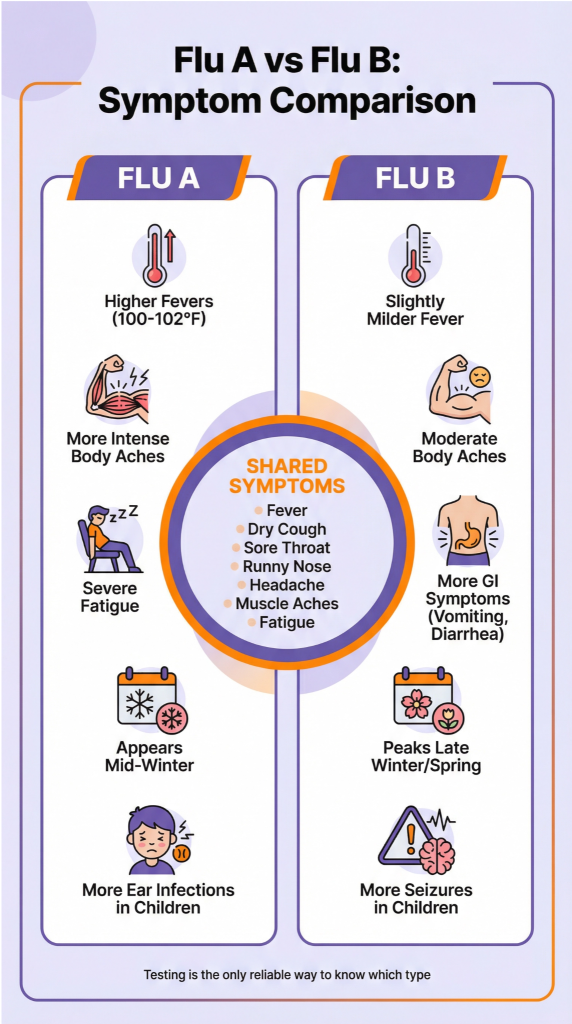
Because the symptom lists overlap so much, testing is usually the only reliable way to know which type you have.
Symptom Comparison: Flu A vs Flu B
Symptom Intensity
Flu A often causes higher fevers, more intense body aches, and more severe fatigue, making many adults feel “knocked out” very quickly.
Flu B can look almost identical, but on average, may cause slightly milder fever and aches in adults, though this pattern is not guaranteed.
Respiratory vs Gastrointestinal Symptoms
Both types commonly cause fever, cough, sore throat, congestion, and headaches. In children, flu A is linked with more ear infections, while flu B is linked with more seizures, vomiting, and diarrhea in some reports. Gastrointestinal symptoms can appear with either type, but may be more frequently noted with flu B in children.
Timing During the Season
- Flu A tends to appear earlier in the season, often in mid‑winter.
- Flu B often circulates later, sometimes peaking in late winter or spring.
You generally cannot tell which type you have from timing alone, but timing can give clinicians additional clues alongside testing.
How Contagious Are Flu A and Flu B?
Both flu A and flu B are highly contagious respiratory viruses spread mainly through droplets when an infected person coughs, sneezes, or talks.
Key points:
- Most people are most contagious in the first 3–4 days after symptoms begin but can spread the virus from about 1 day before symptoms through about 5–7 days after.
- Children and people with weakened immune systems can shed the virus for a longer period.
- Flu A is responsible for most large, fast‑moving seasonal epidemics and pandemics because it infects both humans and animals and can change more dramatically over time.
- Flu B circulates only in humans but still spreads easily in households, schools, and long‑term care settings.
Good hygiene (handwashing, masking when sick, covering coughs, and staying home when ill) helps reduce spread for both types.
Recovery Timeline: Flu A vs Flu B
Recovery varies by person, but the overall pattern for both types is similar.
Typical course:
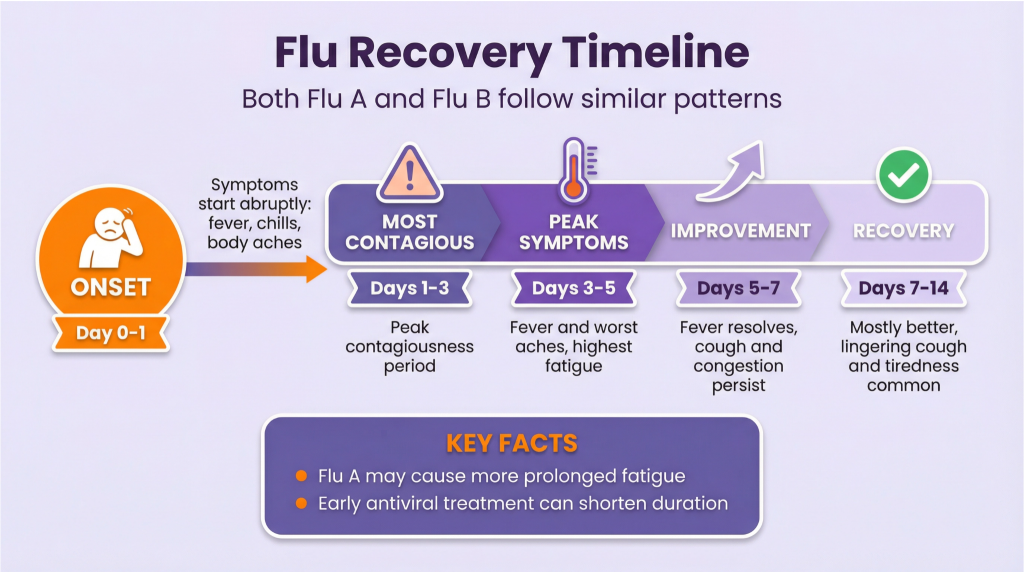
- Onset: Symptoms often start abruptly over a few hours, usually with fever, chills, and body aches.
- First 3–5 days: Fever and the worst aches and fatigue are usually at their peak; this is also when you are most contagious.
- Days 5–7: Fever often resolves; cough, congestion, and fatigue may persist.
- 1–2 weeks: Many people feel mostly better, but a lingering cough and tiredness are common.
Flu A may cause more prolonged fatigue and respiratory symptoms in adults, particularly if complications like bronchitis or pneumonia develop. Flu B may resolve somewhat sooner in otherwise healthy adults, but children and older adults may still have a longer, more intense course.
Prompt antiviral treatment, when appropriate and started early, can shorten symptom duration and lower the risk of complications for both types.
Who Is at Higher Risk from Flu A and Flu B?
Certain groups are more likely to develop severe illness, complications, or require hospitalization from either type of flu.
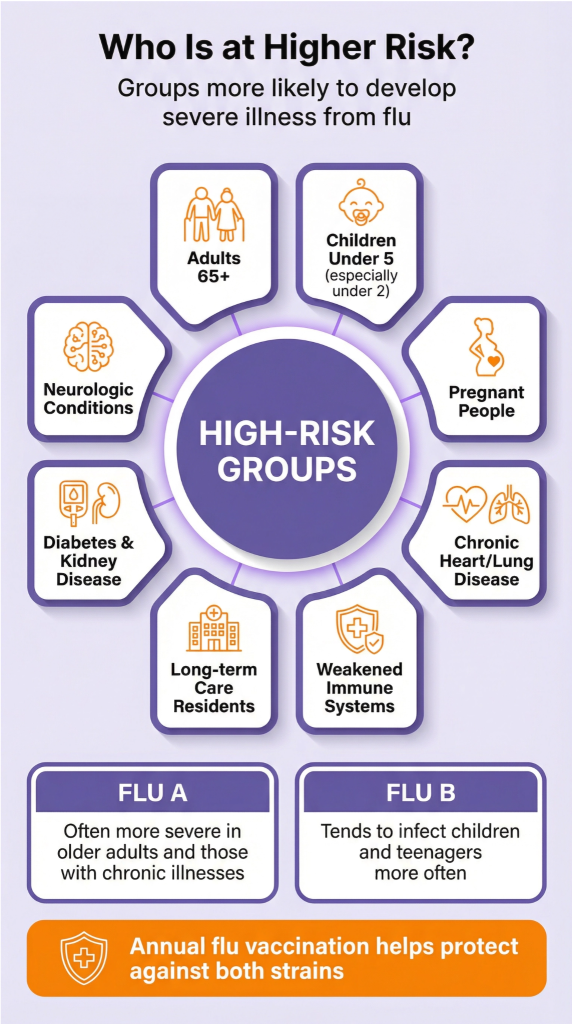
Higher‑risk groups include:
- Adults age 65 and older
- Children under age 5 (especially under 2)
- Pregnant people and those who recently given birth
- People with chronic conditions (heart disease, lung disease, asthma, diabetes, kidney disease, liver disease, neurologic conditions)
- People with weakened immune systems (due to illness or medications)
- Residents of long‑term care facilities
Flu A is often more severe in older adults and those with chronic illnesses. Flu B tends to infect children and teenagers more often and may be especially serious in young children and some older adults.
Annual flu vaccination helps protect against both A and B strains that are expected to circulate each season.
Read When is Flu Season?
When to See a Doctor
Most healthy adults can recover from either flu A or flu B at home with rest, fluids, and over‑the‑counter symptom relief, but some warning signs require medical care.
Call or Visit a Healthcare Provider Promptly If You:
- Are in a high‑risk group and develop flu‑like symptoms.
- Have symptoms that suddenly worsen after starting to improve (possible secondary infection).
- Have a fever that lasts more than a few days or returns after going away.
- Notice painful or difficult breathing, chest pain, or a persistent, worsening cough.
Seek Emergency Care Right Away For:
- Trouble breathing or shortness of breath
- Chest pain or pressure
- New confusion, difficulty waking, or seizures
- Bluish lips or face
- Severe or persistent vomiting
- Signs of dehydration (very little urine, dizziness, extreme weakness)
These red‑flag symptoms can signal complications such as pneumonia, severe dehydration, or heart involvement and need urgent assessment.
Learn more about How Long Do Flu Symptoms Last?
What You Should Do Next
If you suspect flu A or flu B, the most important step is to contact a healthcare professional early, especially if you or your child is in a higher‑risk group. Early evaluation can confirm the diagnosis, rule out other conditions like COVID‑19 or strep throat, and determine whether antiviral medication is appropriate for you.
Want more healthcare tips like this?
Follow HosTalky for expert health insights, flu updates, and everyday wellness advice you can trust.

Nền tảng giải trí trực tuyến hiện đại, tối ưu trải nghiệm người dùng với tốc độ nhanh, giao diện mượt và vận hành ổn định.
QQ88 mang đến nền tảng giải trí trực tuyến được tối ưu hiệu suất, giúp người dùng truy cập nhanh, thao tác mượt và trải nghiệm ổn định.
Greetings from Idaho! I’m bored to death at work so I decided to check out your website on my iphone during lunch break. I enjoy the information you present here and can’t wait to take a look when I get home. I’m amazed at how quick your blog loaded on my mobile .. I’m not even using WIFI, just 3G .. Anyways, good blog!
[2053]Bono777 Casino México: Iniciar Sesión, Slots y Descargar APK Disfruta la emoción de Bono777 Casino México. Juega a los mejores slots, inicia sesión fácilmente y descarga la APK oficial para ganar desde tu celular hoy mismo. visit: bono777