
Effective communication and collaboration are critical components of patient safety and quality care. Traditional communication methods, such as pagers, overhead announcements, and hurried hallway conversations, are no longer sufficient to meet the demands of modern healthcare. The rise of remote work and the increasing complexity of patient care have necessitated a new approach: remote collaboration tools.
These digital platforms are transforming the way nursing teams connect, coordinate, and care for their patients. By providing secure, real-time communication, streamlined workflows, and instant access to critical information, remote collaboration tools empower nurses to work more efficiently, reduce medical errors, and ultimately improve patient outcomes.
In this article, we will explore five of the best remote collaboration tools for nursing units, including the specialized healthcare communication platform Hostalky and other industry-leading solutions.
The Growing Need for Remote Collaboration in Nursing
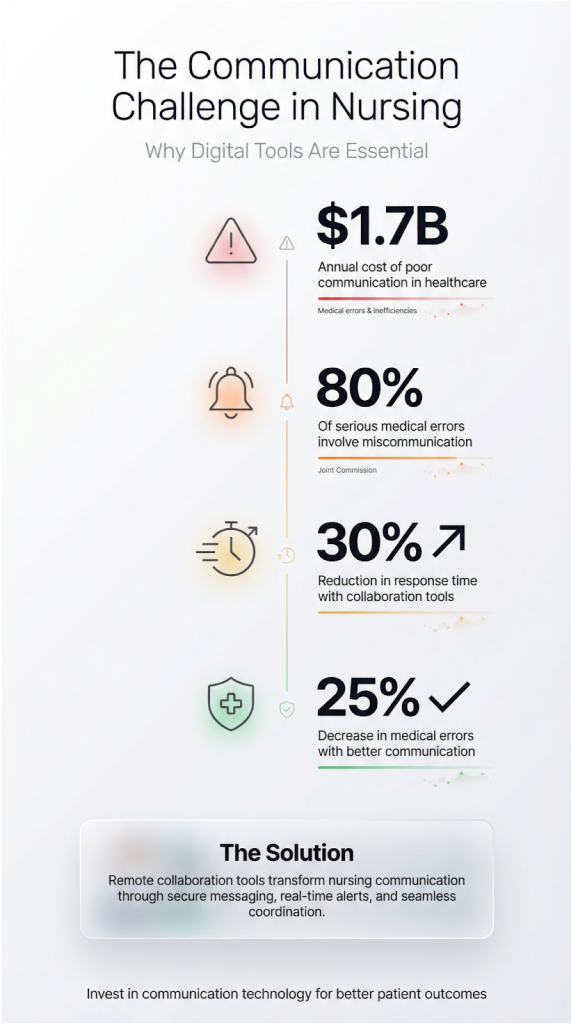
The COVID-19 pandemic accelerated the adoption of telehealth and remote work models, and these trends are here to stay. Even within the hospital walls, the need for efficient, digital communication is more pressing than ever. Nurses are constantly on the move and need to connect with colleagues, access patient information, and coordinate care from anywhere in the facility.
Remote collaboration tools address these challenges by providing a centralized platform for communication and information sharing. They can help to break down communication silos, improve care coordination, and reduce the administrative burden on nurses.
5 Remote Collaboration Tools for Nurses
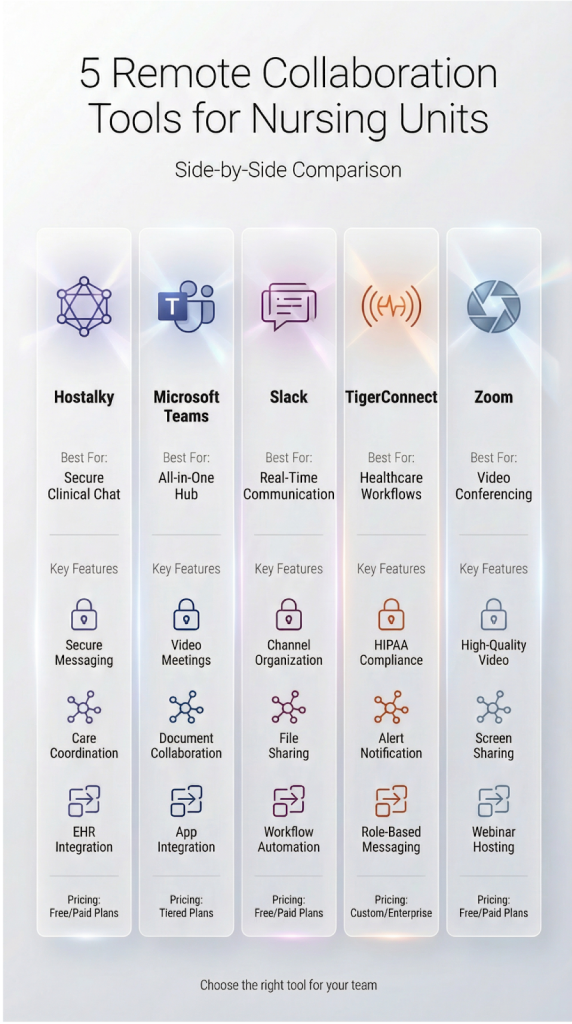
1. Hostalky: The Healthcare-Focused Communication Hub
Hostalky is a purpose-built communication platform designed specifically for the unique needs of the healthcare industry. Unlike generic collaboration tools, Hostalky understands the workflows and security requirements of clinical environments, making it an ideal choice for nursing units.
One of Hostalky’s standout features is &CareID, a personalized identifier that enables seamless, secure communication across healthcare organizations. This is particularly beneficial for nurses who may need to collaborate with specialists or other providers outside of their immediate facility. The platform also boasts robust, HIPAA-compliant messaging, ensuring that all patient information remains confidential and secure.
Key features of Hostalky include:
- AI-Powered Assistance: Hostalky is developing an AI-powered assistant to support tasks such as retrieving patient information, answering clinical questions, and summarizing conversations, freeing nurses to focus on patient care.
- Cross-Device Syncing: The platform is available on both desktop and mobile devices, with seamless syncing between them.
- Secure Note-Taking and Reminders: Hostalky provides a secure space for nurses to take notes and set reminders, helping them to stay organized and on top of their tasks.
With its focus on the healthcare industry and its innovative features, Hostalky is a powerful tool for improving communication and collaboration in nursing units.
Learn more about the Guide to HIPAA Texting Policy Template for Healthcare Providers
2. Microsoft Teams: The All-in-One Collaboration Suite
Microsoft Teams has become a dominant force in remote collaboration, and its application in healthcare is no exception. As a comprehensive platform, Teams offers a wide range of features to improve communication and workflow in nursing units. Its integration with the broader Microsoft 365 ecosystem makes it a versatile tool for healthcare organizations that already use Microsoft products.
For nursing units, Teams provides a secure and centralized hub for communication. Nurses can create channels for specific patient cases, units, or topics, enabling focused, organized conversations. The platform’s robust video conferencing capabilities are ideal for virtual team huddles, shift handoffs, and telehealth consultations. Furthermore, Teams’ file-sharing and co-authoring features enable nurses to collaborate on care plans and other documents in real-time.
Key features of Microsoft Teams for healthcare include:
- Secure Messaging and File Sharing: Teams offers end-to-end encryption and HIPAA compliance, ensuring all communication and data remain secure.
- Telehealth and Virtual Visits: The platform’s video conferencing capabilities enable virtual visits with patients, improving access to care and reducing the need for in-person appointments.
- Integration with EHRs and Other Healthcare Apps: Teams can be integrated with electronic health record (EHR) systems and other healthcare applications, providing nurses with a unified view of patient information.
3. Slack: The Channel-Based Messaging Platform
Slack is another popular collaboration tool widely used across industries, including healthcare. Its channel-based messaging system enables organized, transparent communication, which can be particularly beneficial in a busy nursing unit. By creating channels for different teams, projects, or topics, nurses can ensure that the right information reaches the right people at the right time.
One of Slack’s key strengths is its extensive library of integrations. It can be connected to a wide range of other applications and services, enabling workflow automation and information centralization. For example, Slack can be integrated with EHR systems to provide real-time notifications about patient admissions, discharges, and lab results.
Key features of Slack for healthcare include:
- Channels for Organized Communication: Slack’s channel-based system allows for focused conversations and easy access to information.
- Powerful Search and Archiving: The platform’s search functionality makes it easy to find past conversations and files, which can be invaluable for continuity of care.
- Automation and Integrations: Slack’s ability to integrate with other applications can help to automate routine tasks and streamline workflows.
4. TigerConnect: The Clinical Communication & Collaboration Leader
TigerConnect is a leading clinical communication and collaboration (CC&C) platform designed for the healthcare industry. It is used by thousands of healthcare organizations to improve communication, accelerate workflows, and enhance patient care. TigerConnect offers a comprehensive suite of features that are tailored to the unique needs of clinical environments.
One of TigerConnect’s key features is its role-based messaging system. This allows nurses to contact the on-call physician or other team members without needing to know their name or contact information. The platform also offers alarm management and event notification capabilities that help reduce alarm fatigue and ensure critical alerts are addressed promptly.
Key features of TigerConnect include:
- Role-Based Messaging: This feature enables efficient, reliable communication with on-call staff.
- Alarm Management and Event Notification: TigerConnect can integrate with medical devices and other clinical systems to deliver real-time alerts and notifications.
- EHR Integration: The platform can be integrated with EHR systems to provide a unified view of patient information.
5. Zoom: The Video Conferencing Powerhouse
Zoom has become synonymous with video conferencing, and its use in healthcare has exploded in recent years. While it may not be a comprehensive collaboration platform like some of the other tools on this list, Zoom’s ease of use and reliability make it an excellent choice for telehealth and virtual communication in nursing units.
For nurses, Zoom can be used for a variety of purposes, including virtual team meetings, remote training sessions, and telehealth consultations with patients. The platform’s screen-sharing and annotation features are particularly useful for collaborating on care plans and reviewing medical images.
Key features of Zoom for healthcare include:
- High-Quality Video and Audio: Zoom is known for its reliable, high-quality video and audio, which are essential for effective telehealth consultations.
- HIPAA-Compliant Plans: Zoom offers healthcare-specific plans that are compliant with HIPAA and other healthcare regulations.
- Breakout Rooms and Other Collaboration Features: The platform’s breakout rooms and other collaboration features are ideal for small group discussions and training sessions.
Overcoming the Challenges of Remote Collaboration
While remote collaboration tools offer numerous benefits, implementing them in a nursing unit is not without its challenges. It is important to proactively address these challenges to ensure successful adoption.
- Resistance to Change: Nurses are accustomed to their current workflows and may be reluctant to adopt new technologies. It is important to involve them in the selection and implementation process and to provide adequate training and support.
- Data Security and Privacy: Protecting patient information is paramount. It is essential to choose a HIPAA-compliant platform with robust security features.
- Integration with Existing Systems: The new tool should integrate seamlessly with your existing systems, such as your EHR, to avoid creating data silos.
- Alarm Fatigue: If the tool is used for alerts and notifications, configure it to minimize the risk of alarm fatigue.
By addressing these challenges head-on, healthcare organizations can ensure smooth, successful implementation of remote collaboration tools across their nursing units.
Learn more in The Ultimate Guide to Remote Nursing Jobs
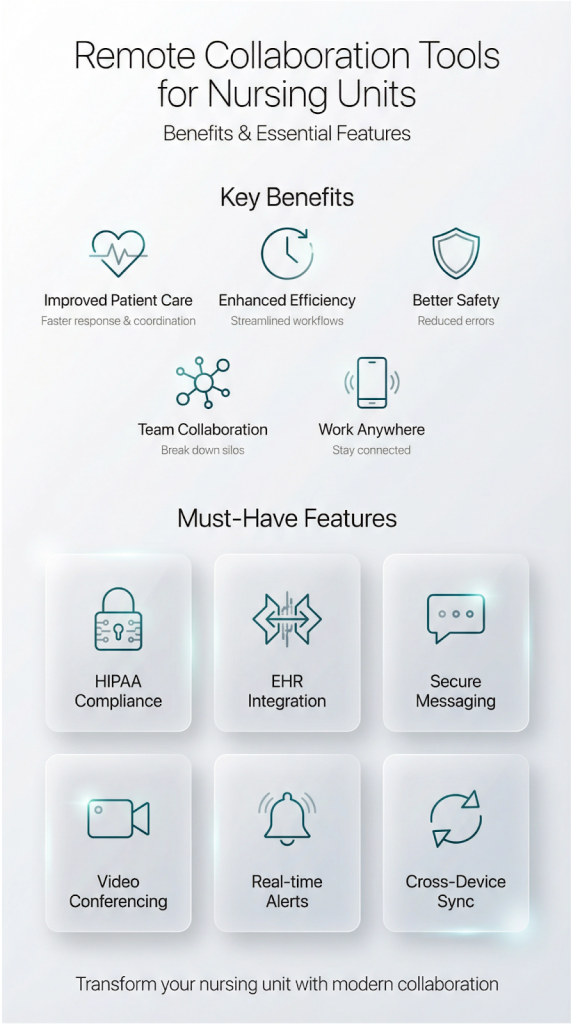
Choose the Right Tool for Your Nursing Unit
With so many remote collaboration tools available, it can be challenging to choose the right one for your nursing unit. Here are a few factors to consider:
- Ease of Use: The tool should be intuitive and easy to use, with a minimal learning curve for busy nurses.
- Security and Compliance: The platform must be HIPAA-compliant and offer robust security features to protect patient information.
- Integration Capabilities: The tool should integrate with your existing systems, including your EHR and other clinical applications.
- Cost: The platform’s cost should be a consideration, but not the only factor. The right tool can provide a significant return on investment by improving efficiency and patient care.
Ready to Transform Your Nursing Unit Communication?
If you’re looking for a remote collaboration tool that truly understands the unique needs of healthcare professionals, Hostalky is your answer. Purpose-built for nursing units and healthcare teams, Hostalky combines secure messaging, AI-powered assistance, and seamless cross-device syncing to help you deliver better patient care.
Why Choose Hostalky for Your Nursing Unit?
- Healthcare-First Design: Unlike generic collaboration tools, Hostalky is built specifically for clinical workflows and healthcare communication needs.
- &CareID Technology: Connect instantly with colleagues across different facilities using personalized professional identifiers.
- HIPAA-Compliant Security: Rest assured that all patient information remains confidential and secure.
- AI-Powered Efficiency: Let artificial intelligence handle routine tasks so your nurses can focus on what matters most—patient care.
- Free to Get Started: Download Hostalky for free on Android, iOS, Windows, or Mac and experience the difference.
Get Started with Hostalky Today →
Join thousands of healthcare workers who trust Hostalky to strengthen communication and improve patient outcomes.
Contact Hostalky: Call +1(877)718-2018 or email inquiry@hostalky.com to learn how Hostalky can transform your nursing unit’s communication.
Conclusion
The adoption of remote collaboration tools is no longer a luxury for nursing units; it is a necessity. By embracing these technologies, nursing teams can improve communication, streamline workflows, and ultimately, provide better care for their patients.
Whether you choose a specialized healthcare platform like Hostalky or a more general-purpose tool like Microsoft Teams or Slack, the right remote collaboration tool can make a significant difference in the fast-paced, demanding environment of a nursing unit.
If you are ready to revolutionize communication and collaboration in your nursing unit, we encourage you to explore the tools mentioned in this article. Many of them offer free trials or demos, so you can see for yourself how they can benefit your team. The future of nursing is connected, and with the right remote collaboration tools, you can empower your nurses to provide the best possible care to your patients.

QQ88 là nền tảng giải trí trực tuyến được thiết kế tối giản nhưng hiệu quả, mang đến trải nghiệm truy cập mượt và vận hành ổn định lâu dài
It’s actually a nice and helpful piece of info. I’m glad that you shared this helpful information with us. Please keep us informed like this. Thanks for sharing.
QQ88 mang đến không gian giải trí đỉnh cao với kèo cược đa dạng, tỷ lệ hấp dẫn và chương trình ưu đãi liên tục. Đăng nhập dễ dàng, hỗ trợ 24/7, chơi mọi lúc mọi nơi.
QQ88 mang đến trải nghiệm giải trí an toàn, minh bạch cùng hệ thống kèo cược hấp dẫn và ưu đãi liên tục. Nạp rút nhanh, hỗ trợ 24/7, đồng hành cùng bet thủ mọi lúc.
QQ88 quy tụ cộng đồng cược thủ đông đảo nhờ nền tảng ổn định, giao dịch nhanh và chính sách thưởng minh bạch. Giải trí an toàn, hỗ trợ 24/7 trên mọi thiết bị.
QQ887P.COM LÀ THƯƠNG HIỆU CÁ CƯỢC UY TÍN CỦA NHÀ CÁI QQ88. Đăng ký +88K
QQ88 mang đến sân chơi giải trí an toàn, minh bạch cùng hệ thống ưu đãi hấp dẫn mỗi ngày. Hỗ trợ 24/7, đăng ký nhanh gọn, đồng hành lâu dài cùng cược thủ.
QQ88 media LÀ THƯƠNG HIỆU CÁ CƯỢC UY TÍN CỦA NHÀ CÁI QQ88. Đăng ký +88K
QQ88 được biết đến là nhà cái online uy tín, sở hữu hệ sinh thái cá cược phong phú cùng nhiều chương trình khuyến mãi hấp dẫn dành cho thành viên mới và hội viên lâu năm. Hệ thống hỗ trợ khách hàng 24/7, giao dịch nhanh chóng và minh bạch, đáp ứng nhu cầu giải trí của cộng đồng người chơi hiện nay.
QQ88 được định vị là nhà cái online đa sản phẩm, phục vụ cộng đồng người chơi với hàng trăm trò chơi đổi thưởng và tỷ lệ cá cược cạnh tranh. Hệ thống hỗ trợ 24/7, tối ưu trải nghiệm trên mọi thiết bị và liên tục cập nhật chương trình ưu đãi hấp dẫn cho thành viên.
I like what you guys are up also. Such smart work and reporting! Keep up the superb works guys I have incorporated you guys to my blogroll. I think it’ll improve the value of my site :).
Fly88 là nhà cái cá cược trực tuyến cung cấp các sản phẩm cá cược hấp dẫn như Ca.si.no, Game bài, Thể thao, Nổ hũ, Xổ số và Đá gà. Với kho trò chơi phong phú, nhà cái Fly88 tự tin đáp ứng trọn vẹn mọi nhu cầu giải trí và mang lại những trải nghiệm cá cược tuyệt vời nhất cho cộng đồng người chơi Việt.
QQ88 mang đến sân chơi giải trí trực tuyến chuyên nghiệp với tỷ lệ kèo cạnh tranh, kho game đa dạng và dịch vụ hỗ trợ người chơi 24/7.QQ88 mang đến sân chơi giải trí trực tuyến chuyên nghiệp với tỷ lệ kèo cạnh tranh, kho game đa dạng và dịch vụ hỗ trợ người chơi 24/7.
Excellent insights on healthcare collaboration tools! Just as secure, real-time communication is vital for patient care coordination, the technology infrastructure behind modern platforms demonstrates how seamless connectivity enhances team efficiency across all digital environments. These solutions truly bridge the gap between mobility and information access. 29jl game platforms showcase similar innovation in user experience design.
Loving the info on this web site, you have done outstanding job on the blog posts.