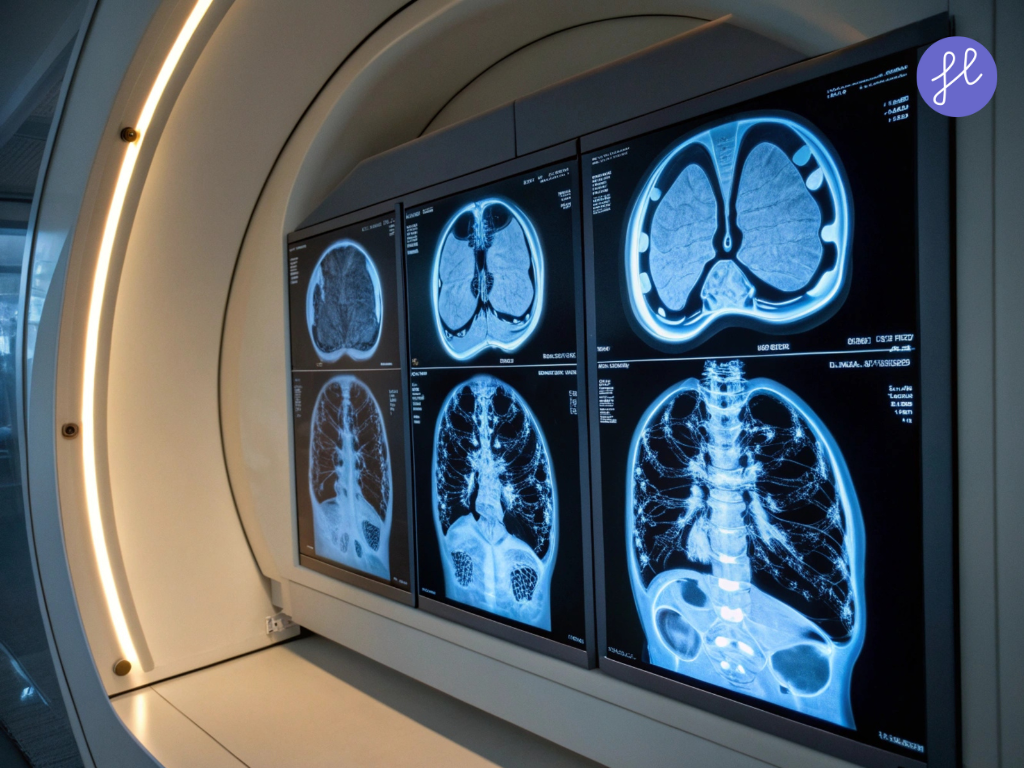
Artificial intelligence is moving from experimental research to practical deployment across healthcare systems. Hospitals, insurers, and digital health companies now rely on machine learning models to improve diagnosis, automate workflows, and analyze large clinical datasets.
Healthcare generates massive amounts of information. Electronic health records, imaging data, genomic sequences, and wearable device streams all contribute to a growing data ecosystem. According to the International Data Corporation, global healthcare data volume is projected to grow at a 36% annual rate, reaching several zettabytes within the decade.
AI systems help convert this data into actionable insights. Yet real-world deployment requires careful integration with clinical workflows, regulatory compliance, and strong validation procedures.
This article examines 10 common applications of artificial intelligence in healthcare, with technical insights, real-world examples, and practical limitations.
Why AI Is Becoming Central to Healthcare Systems
Healthcare environments produce complex decision-making scenarios. Physicians must interpret large datasets under time pressure while maintaining patient safety.
Artificial intelligence helps address three core challenges:
- Data overload: Hospitals produce millions of clinical data points daily.
- Operational inefficiency: Clinicians spend significant time on administrative work.
- Diagnostic complexity: Many conditions require pattern recognition across large datasets.
Recent research highlights the scale of AI adoption:
- Over 1,000 AI-enabled medical devices have been authorized by the U.S. FDA.
- McKinsey estimates AI could generate $200–$360 billion annually in healthcare productivity gains.
- Radiology departments report 20–30% faster image interpretation when AI assistance is used.
However, real-world impact depends on careful system integration and human oversight.
1. Medical Imaging Analysis
Medical imaging remains one of the most mature AI applications in healthcare. Deep learning models analyze scans such as:
- CT scans
- MRI images
- X-rays
- mammograms
These models detect patterns that may indicate disease.
Example
Google Health developed an AI system that detects breast cancer from mammograms. In clinical testing, the system reduced false positives by 5.7% and false negatives by 9.4% compared to radiologist-only screening.
Benefits
- Faster triage of urgent cases
- Detection of subtle anomalies
- Reduced workload for radiologists
Limitations
- Models can fail on rare conditions.
- Dataset bias can reduce accuracy across demographics.
- Clinical validation is expensive and time-consuming.
2. Clinical Decision Support Systems
Clinical decision support systems (CDSS) help physicians interpret complex patient data. These platforms combine:
- patient history
- lab results
- imaging findings
- clinical guidelines
AI models analyze the information and recommend possible diagnoses or treatment pathways.
Example
Sepsis detection algorithms deployed in several hospitals have shown early detection improvements of up to 6 hours before clinical recognition, significantly improving patient outcomes.
Performance considerations
Effective CDSS systems require:
- real-time EHR integration
- reliable patient data pipelines
- explainable model outputs
Physicians must understand why the model recommends a specific intervention.
3. Drug Discovery and Development
Drug development is traditionally slow and expensive. On average:
- Developing a new drug costs $1–2.6 billion.
- The process can take 10–15 years.
AI accelerates early-stage research by identifying promising compounds faster.
Key techniques
- deep learning molecular prediction
- protein structure modeling
- generative chemistry models
Example
AI company Insilico Medicine used generative AI to design a novel drug candidate in under 18 months, significantly faster than traditional discovery timelines.
Trade-offs
- AI-generated molecules still require full clinical trials.
- Biological systems remain highly unpredictable.
- Regulatory validation remains a major bottleneck.
4. Predictive Analytics for Patient Risk
Hospitals use predictive models to identify high-risk patients. These systems analyze historical patient data to predict outcomes such as:
- hospital readmissions
- disease progression
- complications after surgery
Example
Predictive models used by health systems like Kaiser Permanente have helped reduce hospital readmissions by up to 15–20%.
Real-world impact
Predictive analytics enables proactive interventions such as:
- earlier treatment adjustments
- targeted patient monitoring
- preventive care programs
5. Clinical Documentation Automation
Physicians spend large amounts of time on documentation. Studies show clinicians spend up to 35% of their workday on electronic health record tasks.
Natural language processing (NLP) systems can automate this process.
Example workflow
- AI transcribes doctor–patient conversations.
- NLP models structure the text into medical notes.
- The output integrates directly into EHR systems.
Example technologies
- speech recognition models
- medical entity recognition systems
- clinical summarization algorithms
Several hospitals report documentation time reductions of 20–30% using AI-assisted note generation.
6. Personalized Medicine
Artificial intelligence enables treatment plans tailored to individual patients. These systems combine data from:
- genomic sequencing
- patient history
- lifestyle data
- clinical outcomes
Example
In oncology, AI models analyze genomic mutations to match patients with targeted therapies.
The global precision medicine market is expected to exceed $175 billion by 2030, reflecting the growing demand for personalized treatments.
Technical challenges
- genomic datasets are extremely large
- data standardization remains difficult
- privacy concerns limit data sharing
Read more on Telehealth vs Telemedicine vs Telecare
7. Remote Patient Monitoring
Wearable devices and remote monitoring systems generate continuous health data streams. Examples include:
- heart rate monitors
- glucose sensors
- blood pressure trackers
AI models analyze this data to detect early warning signals.
Example
Remote cardiac monitoring platforms can detect irregular heart rhythms with over 90% accuracy using machine learning models.
System architecture
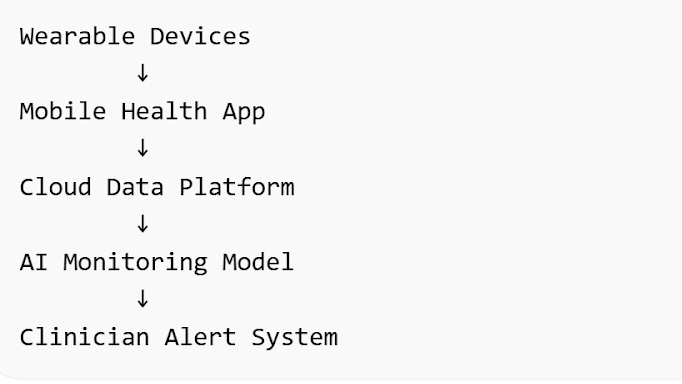
This enables early intervention for chronic conditions such as diabetes or cardiovascular disease.
8. Hospital Workflow Optimization
AI systems also improve operational efficiency inside hospitals. Examples include:
- patient scheduling optimization
- operating room utilization planning
- staffing demand prediction
Data insight
Hospitals often operate with bed occupancy rates above 80–90%, making resource allocation critical. Machine learning models can forecast patient demand and optimize resource allocation.
Results
Hospitals deploying predictive scheduling models report:
- 10–15% reductions in patient wait times
- improved operating room utilization
- lower administrative costs
9. Fraud Detection in Healthcare Billing
Healthcare fraud is a major financial issue. The U.S. government estimates healthcare fraud costs exceed $60 billion annually.
Machine learning models detect suspicious billing patterns.
Example detection methods
- anomaly detection algorithms
- transaction pattern analysis
- network analysis across providers
System workflow
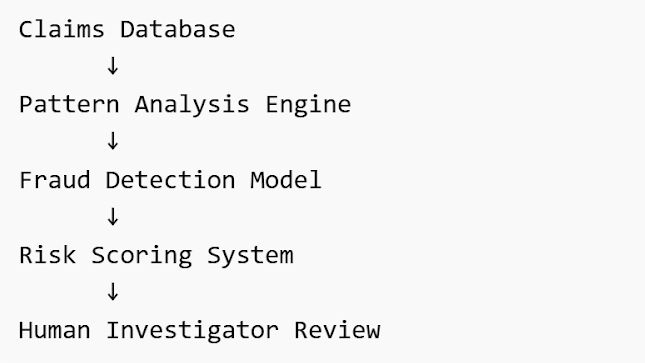
This hybrid approach reduces false positives while improving fraud detection accuracy.
10. Virtual Health Assistants and Chatbots
AI-powered virtual assistants support both patients and clinicians. Common use cases include:
- symptom triage
- appointment scheduling
- medication reminders
- mental health support
Example
Digital triage assistants can resolve up to 30–40% of routine patient inquiries without human intervention.
Technologies involved
- large language models
- clinical knowledge graphs
- conversational AI systems
However, these systems must operate under strict safety constraints. Incorrect advice can create serious clinical risks.
Key Challenges in AI Healthcare Adoption
Despite rapid progress, several barriers remain.
Data quality problems
Healthcare data is often incomplete or inconsistent. Poor data quality reduces model accuracy.
Regulatory requirements
Medical AI systems must pass strict regulatory review before clinical use.
Integration complexity
AI tools must integrate with existing hospital systems such as EHR platforms.
Trust and interpretability
Clinicians are less likely to use AI systems that function as opaque “black boxes.”
Explainable AI techniques are therefore becoming increasingly important.
Final Thoughts
Artificial intelligence is reshaping healthcare across diagnostics, operations, and research. The most impactful applications share several characteristics:
- strong integration with clinical workflows
- access to high-quality datasets
- human oversight in decision-making
AI will not replace clinicians. Instead, it functions as a decision support layer that enhances human expertise.
As healthcare data continues to expand and computing power improves, the role of AI will likely grow even further—supporting faster diagnoses, personalized treatments, and more efficient healthcare systems worldwide.

nustaronline https://www.umnustaronline.org
Khám phá QQ88 – cổng game cá cược online chuyên nghiệp, giao diện tối ưu, bảo mật cao và trải nghiệm mượt mà trên mọi thiết bị.
Khám phá QQ88 – cổng game cá cược online chuyên nghiệp, cập nhật game liên tục và tối ưu trải nghiệm.
QQ88 là nền tảng cá cược trực tuyến chuyên nghiệp, tích hợp casino live, slot đổi thưởng, bắn cá và thể thao ổn định.
QQ88 đóng vai trò như cổng kết nối chính thức, hỗ trợ người dùng tiếp cận hệ sinh thái cá cược trực tuyến an toàn và hiệu quả.
QQ88 mang đến trải nghiệm giải trí trực tuyến linh hoạt, giao diện thân thiện, tốc độ tải nhanh và hệ thống vận hành minh bạch.
QQ88 là địa chỉ truy cập trực tuyến đáng tin cậy, tập trung vào hiệu suất, tính ổn định và sự thuận tiện trong từng lần đăng nhập.
QQ88 được xây dựng như một cổng truy cập giải trí trực tuyến linh hoạt, phù hợp cho người dùng cần sự ổn định và dễ thao tác.
peryaplay https://www.tiperyaplay.net
Hey very cool blog!! Man .. Beautiful .. Amazing .. I will bookmark your blog and take the feeds also…I’m happy to find numerous useful information here in the post, we need work out more techniques in this regard, thanks for sharing. . . . . .
Hey there, You have done a fantastic job. I’ll certainly digg it and individually suggest to my friends. I am sure they will be benefited from this web site.
Terrific work! That is the kind of info that are supposed to be shared around the web. Disgrace on the search engines for no longer positioning this publish upper! Come on over and seek advice from my website . Thank you =)
You completed some good points there. I did a search on the matter and found the majority of persons will have the same opinion with your blog.
Good info. Lucky me I reach on your website by accident, I bookmarked it.